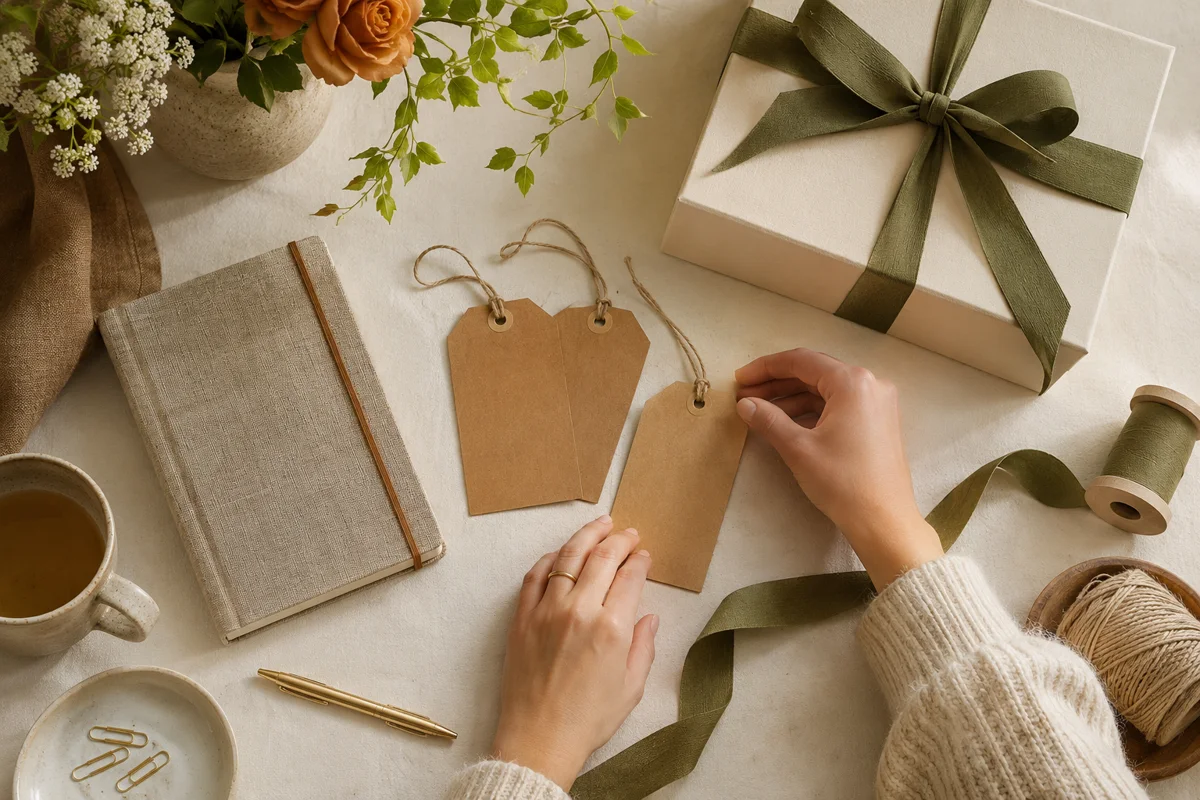
Rather than assuming every man wants the same accessories, this guide starts with how he spends his time. The examples are gift directions, not tested product recommendations. Use them to identify a suitable category and ask better questions about the specific item you are considering.
Begin with an observation you can explain
A good starting sentence sounds like “He carries a notebook everywhere” or “He saves tickets from every trip.” A weaker starting sentence is “Men usually like wallets.” The first gives you a real use case; the second encourages a purchase based on a category rather than a person.
Notice preferences within a category. A reader may like paperbacks but dislike bookmarks with metal edges. A cook may prefer a lightweight cutting board and have no room for a decorative one. An outdoors enthusiast might already have carefully selected equipment. When performance or fit matters, avoid replacing a favorite tool with an unfamiliar customized version.
If he has a technical hobby, personalize an accessory around it rather than guessing at specialist equipment. A notebook for project ideas, a storage pouch of the right size, or an album documenting completed work can feel relevant without interfering with the equipment he trusts. Ask a knowledgeable friend when you need help with dimensions or terminology.
Match the gift to a real routine
### For the person who writes, plans, or sketches A personalized notebook works when the paper and format fit the task. Check lined, dotted, or blank pages; page size; binding; and whether it opens comfortably. A name on the cover is less important than whether the notebook supports the way he works. A removable note can hold a longer message without occupying useful writing space.
For someone who uses refillable covers, check the compatible insert size. Do not assume two notebooks with similar outer dimensions use the same refills. If you cannot confirm the system, a small independent notebook may be more practical than an expensive cover that does not fit his existing materials.
For someone who likes making things
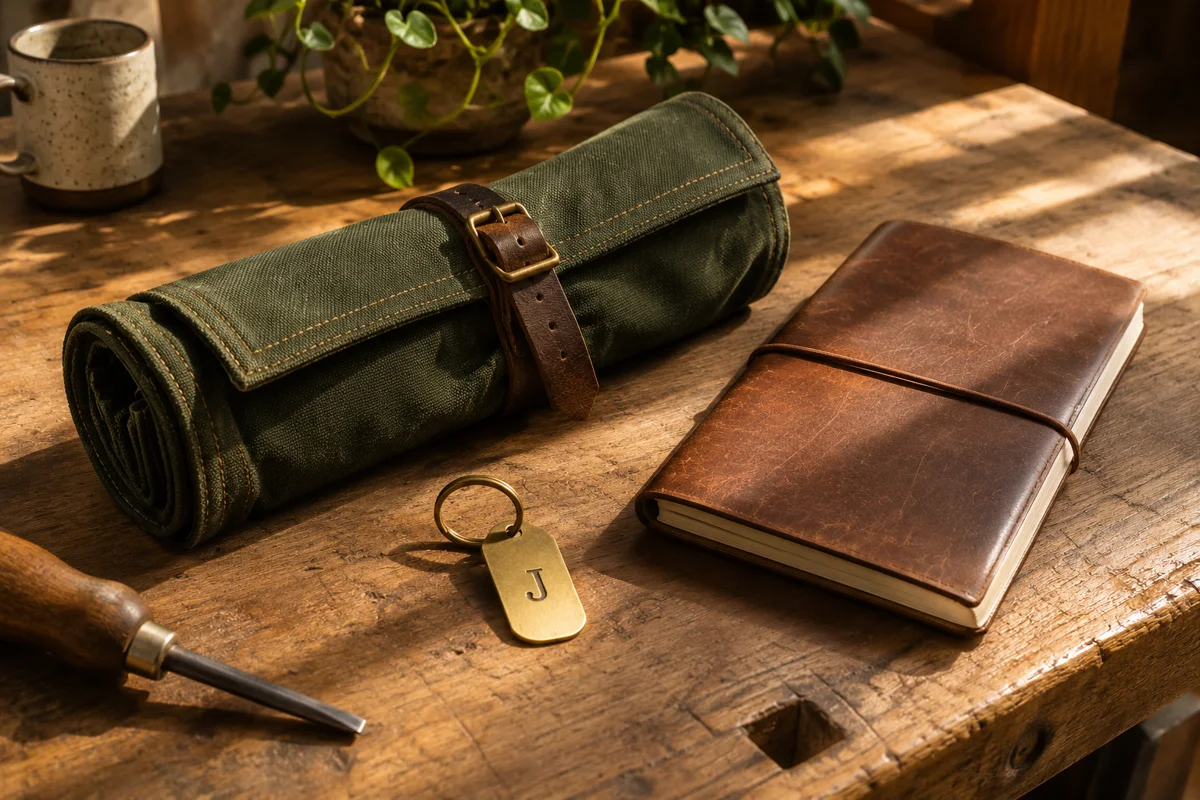
A canvas organizer or a small parts box may suit a maker, provided the pockets and compartments match what he carries. Measure tools before ordering and check closures and construction. A heavy embroidered design can look attractive but reduce usable pocket space if placed poorly.
A gift connected to cooking needs the same attention. If you choose an engraved board, confirm which surface is intended for food preparation and how the seller recommends cleaning it. Do not infer food suitability from appearance. An engraved serving piece can be meaningful, but it should be used according to its actual product instructions.
For the traveler or commuter
A discreet luggage tag, compact document pouch, or travel journal can support an existing habit. Keep publicly visible personal information limited to what he is comfortable sharing. Consider whether the bag has a suitable attachment point, whether the tag closes securely, and whether the size is practical for a carry-on.
For a commuter, look at what already fits in his bag. A large personalized bottle may be inconvenient if it does not fit the side pocket. A new key ring may add weight he does not want. Small improvements are more valuable than a bigger object with a prominent name.
For the person who saves memories
A short photo book, a keepsake box for tickets, or a print of a familiar place can make a good private gift. Choose the theme around something he likes revisiting. Avoid turning a vulnerable experience into a surprise display piece. A personal memory can be honored quietly in a note rather than permanently engraved.
A practical comparison before buying
| Gift type | Useful detail to personalize | Functional check | When to avoid it | | Notebook | Initial or project title | Paper and binding | He uses only digital notes | | Organizer | Small name label | Pocket dimensions | His equipment will not fit | | Luggage tag | Initial and limited contact detail | Closure and attachment | It exposes unwanted information | | Photo book | Captions in your own words | Image quality and page count | Photos are private or unavailable | | Keepsake box | A place or brief phrase | Interior measurements | He prefers no stored objects |
Use this table to eliminate mismatches before comparing styles. Two items may have similar personalization options but very different usefulness. If a product listing hides measurements or materials, ask before purchasing. The absence of clear information is a reason to pause, not to assume the photographs answer the question.
Materials matter more than the monogram
Leather descriptions can refer to different constructions and finishes, so read the actual specifications. For canvas, look at seams, lining, and closures rather than relying on a rugged-looking photograph. For metal items, ask about the finish and cleaning instructions. A personalized object still needs to survive the way its recipient will use it.
Do not promise that engraving will last forever or that a finish cannot scratch. Durability depends on the product, technique, and use. A seller should be able to explain the care expectations for the finished item. If he prefers low-maintenance gear, choose a simple surface and avoid delicate decorative parts.
Compare the complete cost, including personalization and shipping, with the quality of the base object. The same budget might buy either a large item with a weak construction or a smaller, better-finished one. Choose the size he needs, not the largest version that fits the budget.
Write an inscription he would choose to keep
A short phrase tied to a shared memory usually works better than a generic motivational slogan. Consider a place name, project title, meaningful date, or simple initial. Read the wording aloud and imagine it on the object in public. If it feels too intimate for that setting, place it inside or move it to a card.
Check spelling, capitalization, and the meaning of any coordinates or abbreviations. Avoid a date unless you are certain it is the right milestone. A line copied from a private conversation may carry more emotion than the recipient wants displayed. Keep the gift easy to accept without an explanation.
Ordering questions that prevent regret
Ask whether the seller provides a proof, what can be changed before production, and how a buyer-entered error is handled. Save the final design and keep the exact text in one place. Review the item when it arrives, including the reverse, edges, closures, and personalization placement.
For a birthday or holiday, allow for production and transit as separate stages. If the time window is uncertain, a useful standard item with a personal letter is a complete gift. Our Christmas planning guide explains how to organize seasonal orders.
What if he says he does not want anything?
Respect the preference. A shared meal, a letter, or help with something he has asked for can be more welcome than another possession. Personal meaning does not require a custom product.
Is a matching gift a good idea?
It can be, if both people enjoy the idea. Choose coordinated functionality rather than assuming identical tastes. The couples gift guide offers ways to include two people equally, and the selection checklist helps confirm the details.